
- All
- Product Name
- Product Keyword
- Product Model
- Product Summary
- Product Description
- Multi Field Search
English
Views: 0 Author: Site Editor Publish Time: 2026-03-04 Origin: Site


Are you exploring new options for your kitchen or bathroom and wondering about the materials available? You may have come across the term solid surface countertops and questioned what makes them unique. These surfaces offer a sleek, modern look, but what exactly is the solid surface countertops material? Understanding the composition is key to appreciating the benefits and durability of these popular surfaces. This guide will break down the essential components, manufacturing process, and key characteristics of solid surface countertops, giving you the knowledge to make an informed decision for your home. We will explore the minerals, resins, and pigments that combine to create these versatile and beautiful countertops solid surface.
At their core, solid surface countertops are a composite material. They are manufactured by blending natural minerals with synthetic resins. The primary mineral used is Alumina Trihydrate (ATH), a fine white powder derived from bauxite ore. This mineral is a key ingredient because it provides exceptional fire resistance and durability. The other crucial component is the binding resin.
The most common resins used are acrylic or polyester. This binder holds the mineral filler together and gives the final product its non-porous and seamless qualities. The specific blend of ATH and resin determines many of the final characteristics of the solid surface countertops material. The result is a homogenous material, meaning its color and composition are consistent throughout its entire thickness. This is a significant advantage over materials like laminate, where the surface pattern is just a thin layer. For countertops solid surface, any scratches or minor damage can often be sanded out, as the material underneath is identical to the surface.

The manufacturing process for solid surface countertops is a precise science. It begins by mixing the mineral filler (ATH), binding resins, and pigments in a large, temperature-controlled vessel. The pigments are what give the solid surface countertops their vast range of colors and patterns, from solid hues to designs that mimic natural stone.
Once the ingredients are thoroughly blended into a liquid slurry, the mixture is poured into molds to form sheets of a specific thickness. The mixture then undergoes a chemical curing process, often involving heat and pressure, which solidifies it into a hard, durable sheet. After curing, the sheets are calibrated to a uniform thickness and sanded to the desired finish, which can range from matte to high-gloss. This process ensures that every sheet of solid surface countertops material is consistent and meets high-quality standards. The ability to create complex shapes and seamless joints is one of the most significant benefits of this manufacturing technique for countertops solid surface.
The unique composition of solid surface countertops material gives it a set of desirable properties that make it a favorite for both residential and commercial applications.
The blend of minerals and resins creates an incredibly dense and non-porous surface. This means that liquids, bacteria, and stains cannot penetrate the material. This hygienic quality makes solid surface countertops an excellent choice for kitchens and healthcare environments. Unlike natural stone, these countertops solid surface do not require any sealing to maintain their resistance to stains.
While not as hard as quartz or granite, solid surface countertops are highly durable and impact-resistant. They stand up well to the daily demands of a busy kitchen. A major advantage of the solid surface countertops material is that it is renewable and repairable. Because the material is solid all the way through, scratches, chips, or burns can typically be sanded and buffed out, restoring the surface to its original condition. This reparability significantly extends the life of countertops solid surface.
One of the most appealing visual features of solid surface countertops is the ability to create inconspicuous, virtually invisible seams. Installers use a special color-matched adhesive to join pieces together. Once the adhesive cures, the seam is sanded and polished, creating the illusion of a single, continuous piece of material. This is particularly beneficial for large or L-shaped countertops and for integrating sinks made from the same solid surface countertops material. This seamless look is a hallmark of high-end design and a key reason people choose countertops solid surface.
When choosing a countertop, it's helpful to compare the solid surface countertops material to other popular options.
Feature | Solid Surface Countertops | Granite | Quartz | Laminate |
|---|---|---|---|---|
Composition | Mineral filler & resin | Natural stone | Crushed quartz & resin | Plastic & particleboard |
Porosity | Non-porous | Porous (requires sealing) | Non-porous | Non-porous surface |
Seamlessness | Invisible seams | Visible seams | Visible seams | Visible seams |
Repairability | Easily repairable | Difficult to repair | Difficult to repair | Cannot be repaired |
Heat Resistance | Moderate | High | Moderate | Low |
Maintenance | Low | High (needs sealing) | Low | Low |
As the table shows, solid surface countertops offer a unique balance of features. They provide the non-porous and low-maintenance benefits of quartz while adding the superior repairability and seamless appearance that other materials lack. While granite offers higher heat resistance, it requires regular maintenance. The choice ultimately depends on your priorities, but countertops solid surface present a compelling, well-rounded option for many homeowners. Their versatility makes them a strong contender in the market.
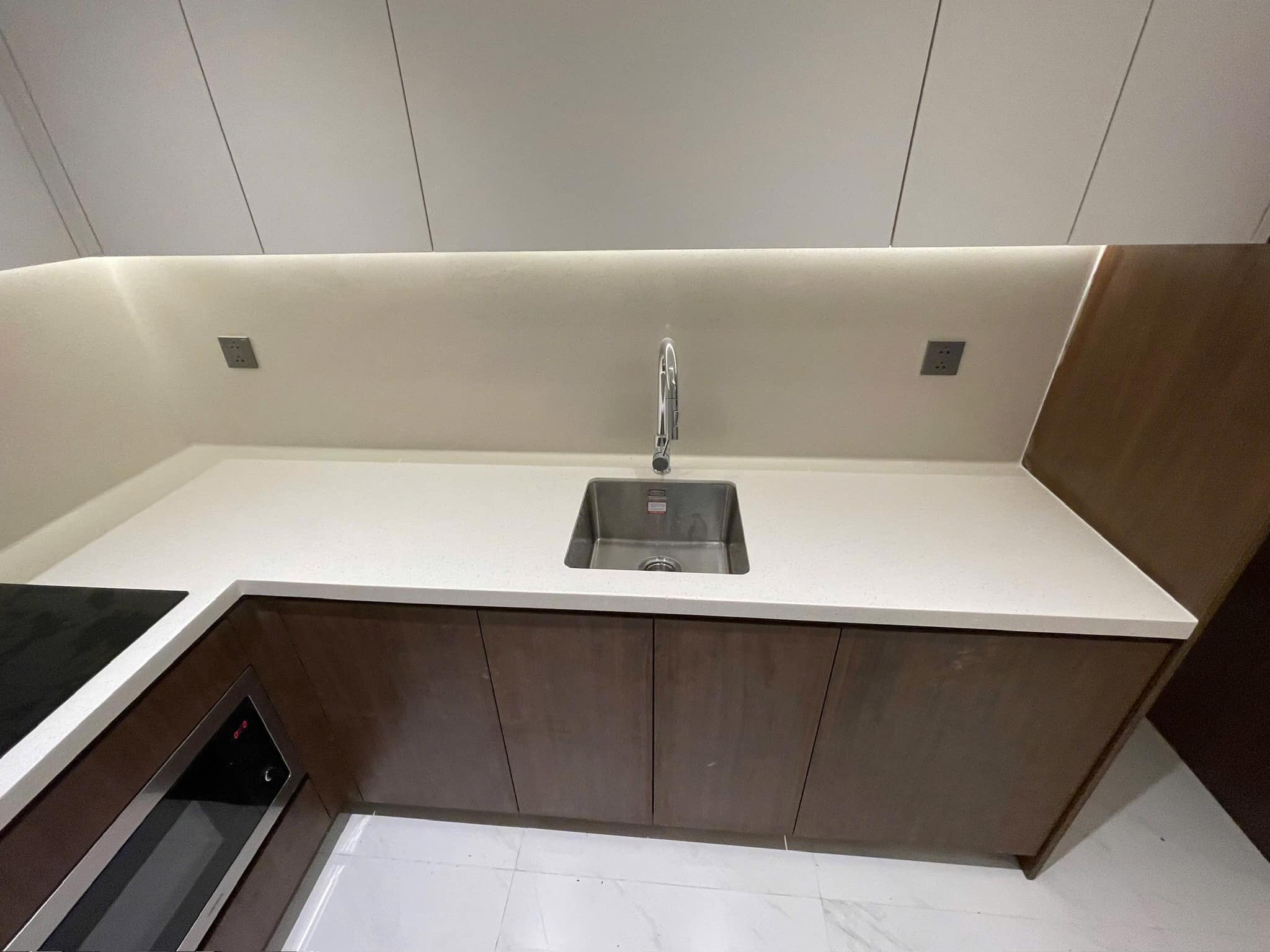
The versatility of the solid surface countertops material opens up a world of design possibilities. Because it can be heated and bent in a process called thermoforming, it can be shaped into curves, custom backsplashes, and integrated sinks. This flexibility allows for truly custom and creative installations that are difficult to achieve with stone or quartz.
The color and pattern options for solid surface countertops are also nearly limitless. Manufacturers can create everything from bright, solid colors to intricate patterns that mimic the look of marble, granite, or concrete. This design freedom makes it easy to match your countertops solid surface to any cabinet style, flooring, or overall design aesthetic. The combination of custom shapes and a vast color palette makes solid surface countertops a designer's dream material. The homogenous nature of the solid surface countertops material ensures that the design is consistent and beautiful from every angle.
For homeowners looking for a reliable, beautiful, and low-maintenance material, solid surface countertops are an excellent investment. Their unique composition provides benefits that other materials simply can't match.
If you are looking for the highest quality in solid surface countertops material, consider products from Surface Solution®. Their commitment to innovation and quality ensures a durable and beautiful surface that will enhance your home for years to come.
Solid surface countertops are a man-made composite material. They are primarily composed of a mineral filler, typically Alumina Trihydrate (ATH), blended with acrylic or polyester resins and pigments for color. This creates a non-porous and homogenous solid surface countertops material.
While they contain synthetic resins (a type of plastic), it is more accurate to call them a composite material rather than just plastic. The inclusion of natural minerals gives countertops solid surface a substance, weight, and durability far superior to a simple plastic sheet.
It is not recommended to place hot pans directly on solid surface countertops. The resins in the material can be damaged by excessive, direct heat, potentially causing discoloration or cracking. Always use trivets or hot pads to protect the surface.
Cleaning solid surface countertops is simple. For daily cleaning, use a soft cloth with warm, soapy water or an ammonia-based cleaner. Abrasive cleaners should be avoided as they can dull the surface. Because the solid surface countertops material is non-porous, stains do not penetrate, making cleanup easy.
Yes, solid surface countertops are considered a very good investment. They offer a great balance of durability, aesthetics, low maintenance, and repairability. The ability to sand out scratches and create seamless installations gives them a long-lasting value that many other materials for countertops solid surface cannot offer.

Email: info@surface-s.com
Phone: +86 13316717867


