
- All
- Product Name
- Product Keyword
- Product Model
- Product Summary
- Product Description
- Multi Field Search
English
Views: 0 Author: Site Editor Publish Time: 2026-01-26 Origin: Site


When planning a kitchen or bathroom renovation, your choice of countertop material plays a huge role in the final look and functionality of the space. While materials like granite and quartz are well-known, have you considered the benefits of solid surface? This guide explores everything you need to know about solid surface countertops, a versatile and durable option that continues to grow in popularity. We will look into the solid surface countertops material, its advantages, and how it compares to other common choices.
A solid surface countertop is a man-made product created from a blend of minerals, pigments, and high-performance acrylic or polyester resins. This unique composition results in a non-porous, homogeneous material. Unlike laminate, which has a thin top layer over a particleboard core, a solid surface has the same consistency all the way through. This is why it's called "solid." Many people refer to them as acrylic countertops because acrylic is a primary component in many high-quality formulas. The manufacturing process allows for a vast range of colors and patterns, making solid surface countertops a designer's favorite for achieving custom looks.
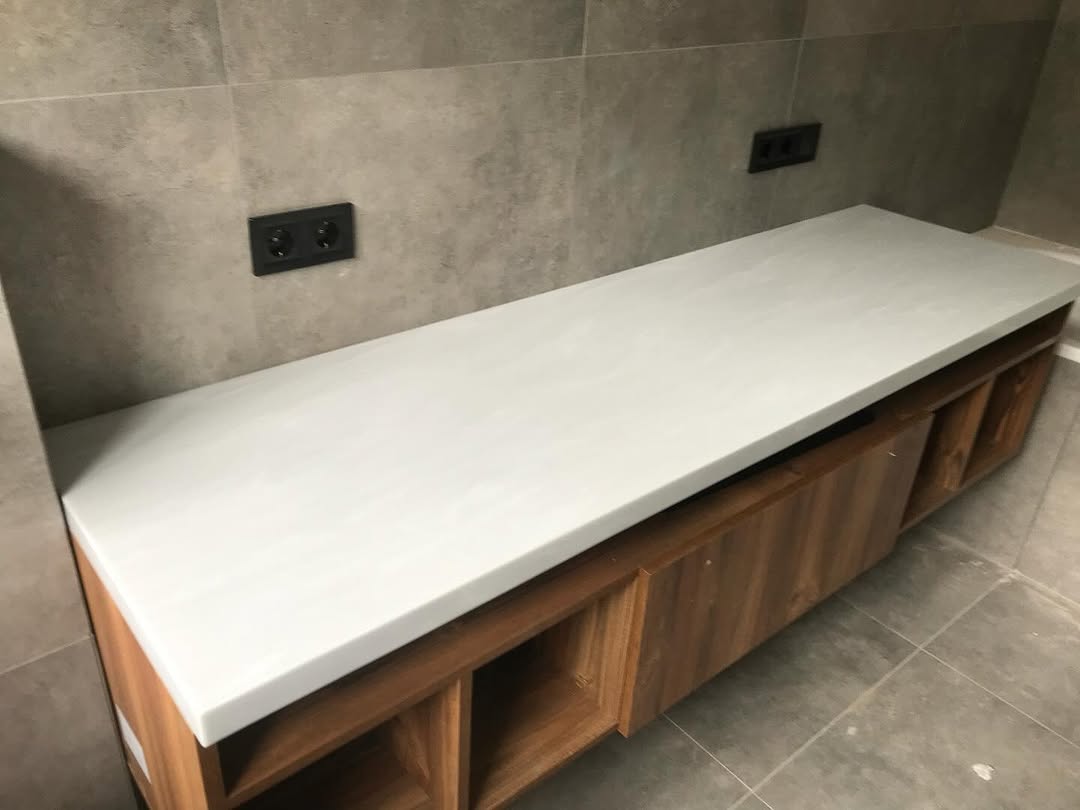
The solid surface countertops material is engineered for performance and aesthetics. It typically consists of about two-thirds natural minerals, like alumina trihydrate (a derivative of bauxite ore), and one-third binding resins, predominantly acrylic or polyester. This combination is then mixed with pigments to create the desired color and pattern. The mixture is poured into molds, chemically cured, and then heated to create a durable, non-porous sheet. This process ensures that the solid surface is consistent in color and pattern from top to bottom, a key feature that distinguishes it from other materials. This makes acrylic countertops exceptionally resilient.
When selecting a countertop, how does a solid surface compare to other options? Acrylic countertops offer a unique middle ground. Compared to natural stone like granite, solid surface countertops are non-porous, meaning they don't require sealing to resist stains and bacteria. Unlike quartz, which can be damaged by high heat, many solid surface options can be repaired if scorched. And when put next to laminate, the durability and seamless appearance of solid surface are far superior. The solid surface countertops material offers a blend of beauty, performance, and reparability that is hard to match.
Feature | Solid Surface Countertops | Granite | Laminate |
|---|---|---|---|
Porosity | Non-porous | Porous (requires sealing) | Non-porous surface layer |
Seamless Look | Yes, seams are invisible | No, seams are visible | Yes, but edges can peel |
Reparability | Excellent (scratches/burns can be sanded out) | Difficult to repair chips | Not repairable |
Stain Resistance | High | Good (when sealed) | Good, but can stain |
Heat Resistance | Moderate (can be damaged by high heat) | Excellent | Poor (can melt/burn) |
Why should you consider solid surface countertops for your next project? The benefits are numerous, ranging from aesthetic flexibility to practical, everyday performance. The unique properties of the solid surface countertops material make it an excellent choice for both homes and commercial settings.
Absolutely. One of the most significant advantages of a solid surface is the ability to create visually seamless installations. During fabrication, pieces of solid surface can be glued together with a special color-matched adhesive. Once the adhesive cures, the seam is sanded and buffed until it becomes completely invisible. This allows for long, continuous countertops with integrated sinks, creating a smooth, monolithic look that is both beautiful and hygienic. This is a key reason why designers love working with acrylic countertops.
The non-porous nature of the solid surface countertops material makes it inherently hygienic. Because there are no tiny holes or cracks for liquids, germs, or bacteria to penetrate, the surface is easy to clean and maintain. This makes solid surface countertops an ideal choice for kitchens, bathrooms, healthcare facilities, and restaurants where cleanliness is a top priority. Unlike tile, there are no grout lines to scrub, further simplifying cleaning routines.
Yes, maintaining and repairing a solid surface is remarkably straightforward. For daily cleaning, simple soap and water or a mild household cleaner is all you need. Since the material is solid all the way through, minor scratches, stains, or even scorch marks can often be removed. Light scratches can be buffed out with a gentle abrasive cleaner and a scouring pad. Deeper damage on acrylic countertops can be professionally sanded out, restoring the surface to its original condition. This reparability extends the life of your solid surface countertops significantly.
Beyond their practical benefits, acrylic countertops open up a world of design creativity. The versatility of the solid surface countertops material allows it to be shaped, molded, and customized in ways that stone and other materials cannot.
The range of colors and patterns for solid surface is virtually limitless. You can find everything from solid, vibrant colors to subtle neutrals and intricate patterns that mimic natural stone like marble or granite. Because pigments are added during the manufacturing process, you can achieve a consistent and uniform look that is not always possible with natural materials. This creative freedom makes solid surface a powerful tool for achieving your specific design vision.
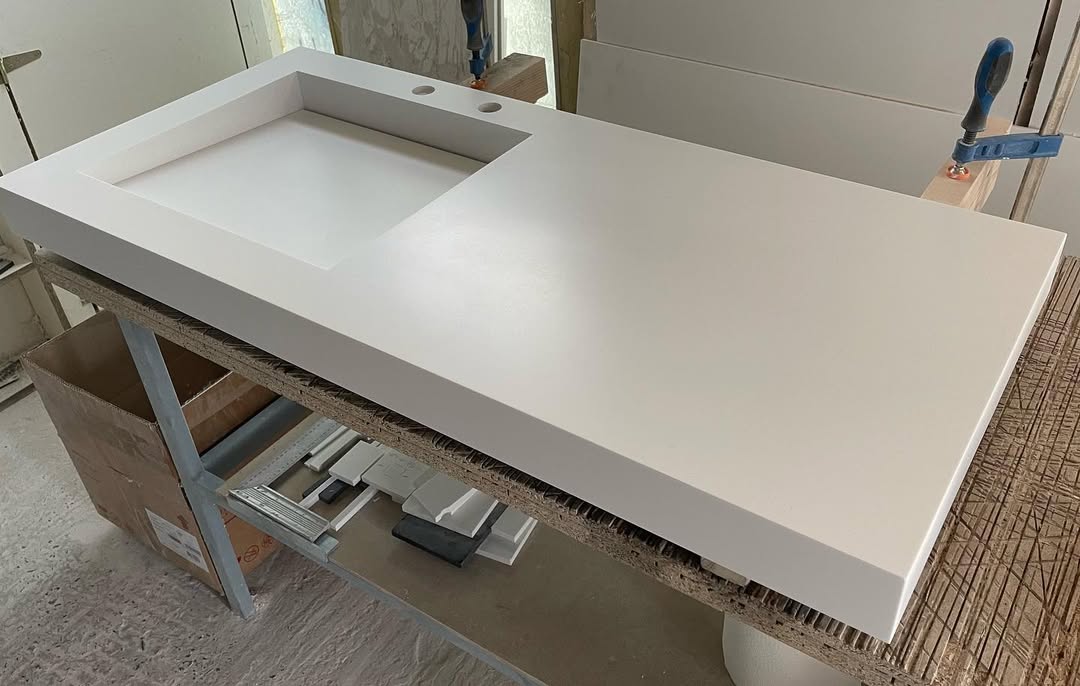
Yes, and this is where solid surface truly shines. The material can be heated and bent through a process called thermoforming. This allows fabricators to create curved backsplashes, rounded countertop edges, and other custom shapes that add a unique flair to any design. Integrated sinks made from the same solid surface countertops material are also a popular option, eliminating rims that can trap dirt and creating a sleek, unified look. This flexibility makes acrylic countertops a go-to choice for ambitious and creative projects.
While solid surface countertops are an excellent option, there are a few considerations to keep in mind. Understanding these points will help ensure you are fully satisfied with your investment. The solid surface itself is robust, but it's not indestructible. It is softer than quartz or granite, making it more susceptible to scratches from knives. It’s always recommended to use a cutting board. Additionally, while resistant to many stains, prolonged exposure to harsh chemicals can cause discoloration. Finally, placing hot pots and pans directly on the solid surface countertops material can cause damage, so using trivets is essential.
For those seeking a durable, beautiful, and low-maintenance material, solid surface countertops are a fantastic choice. The seamless look of acrylic countertops, combined with their hygienic properties and reparability, offers long-term value.
If you are looking for a top-tier solid surface product that embodies all these qualities, we recommend considering Surface Solution®. Their commitment to quality ensures you receive a premium solid surface that will stand the test of time.

The primary solid surface countertops material is a blend of natural minerals (like alumina trihydrate) and synthetic resins (like acrylic or polyester), along with pigments for color. This creates a non-porous, homogeneous solid surface.
Yes, the terms are often used interchangeably. Acrylic countertops are a type of solid surface where acrylic resin is the main binding agent. They are known for their durability, UV resistance, and seamless appearance.
Cleaning a solid surface is simple. Use a soft cloth with warm, soapy water or an ammonia-based cleaner for daily maintenance. Avoid abrasive chemicals. For stubborn residues, a mild abrasive cleaner can be used.
It is not recommended. While the solid surface countertops material is durable, it can be scratched by sharp knives. Always use a cutting board to protect your countertop's finish.
Email: info@surface-s.com
Phone: +86 13316717867


