
- All
- Product Name
- Product Keyword
- Product Model
- Product Summary
- Product Description
- Multi Field Search
English
Views: 0 Author: Site Editor Publish Time: 2026-07-14 Origin: Site


Quick answer:
Architects, buyers, and commercial builders use an acrylic solid surface catalog to compare color options, technical specs, and supplier capabilities before committing to a material. With hundreds of finishes now available from manufacturers—particularly from China—knowing how to read and evaluate a catalog is one of the most practical skills a specifier can develop.
Sourcing the wrong surface material is an expensive mistake. A countertop or vanity that looks great in a render but fails a hygiene audit or chips within a year costs far more than the material itself—it costs rework, client trust, and project timelines.
That's why experienced procurement teams don't browse casually. They study an acrylic solid surface catalog the same way an engineer studies a datasheet: looking for composition ratios, certifications, thickness tolerances, and finish categories before any sample is ordered.
This article breaks down what a strong catalog should contain, how to compare suppliers across key performance criteria, and why China-based manufacturers have become the default sourcing destination for commercial projects worldwide.

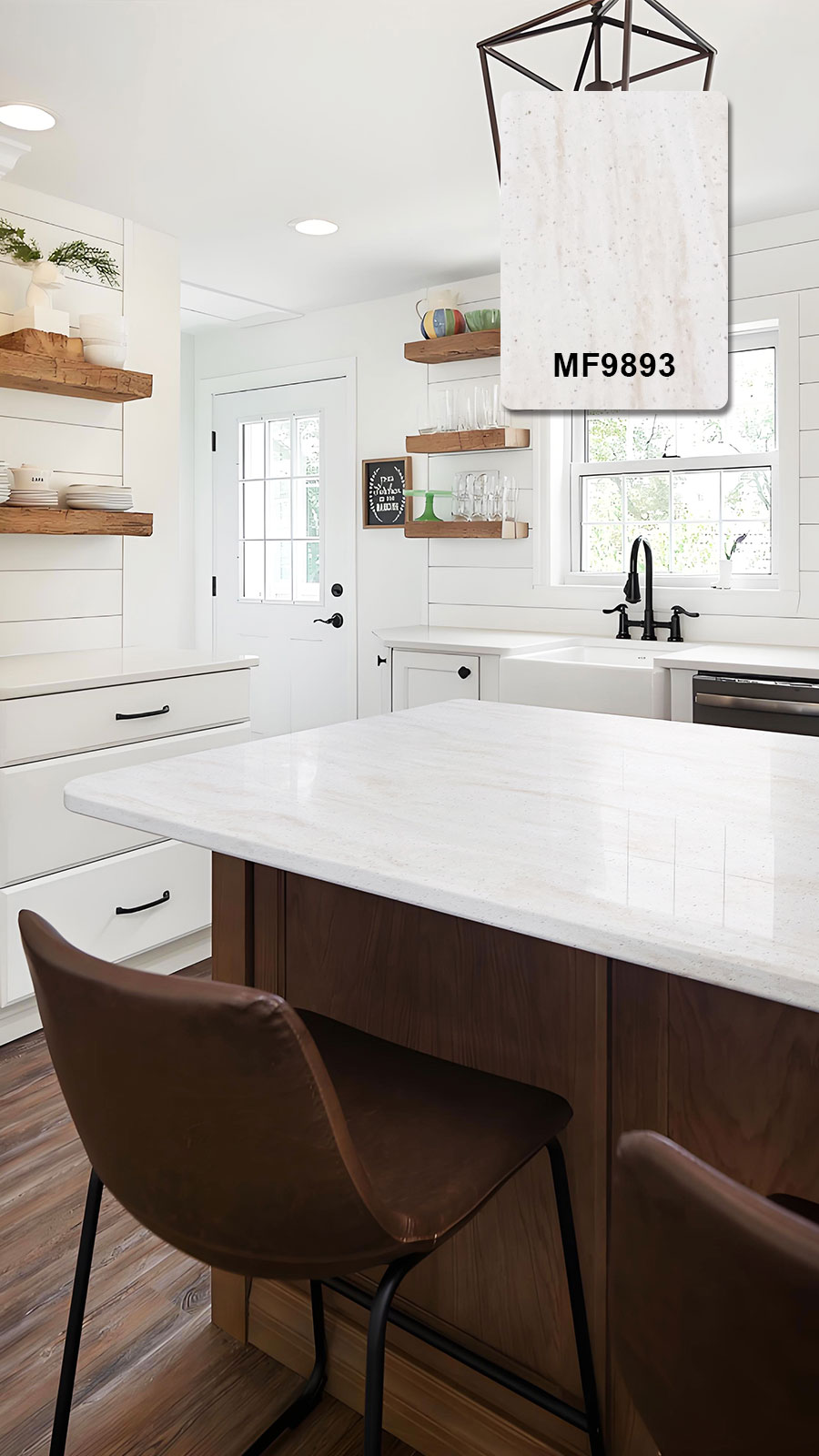
A catalog is more than a color swatch collection. For professional buyers, it's a technical reference document. Here's what separates a useful one from a marketing brochure:
Color and Pattern Range
Top-tier catalogs organize finishes into categories: solid colors, granite-effect, marble-effect, and terrazzo-effect. Surface Solution®, manufactured by Shenzhen Letu Industrial Co., Ltd., offers over 300 color and pattern options developed over more than 20 years—covering trends from minimalist whites to bold veined textures.
Technical Specifications
Every entry should list sheet dimensions, thickness options (typically 6mm, 12mm, and 19mm), density, heat resistance, and UV stability. Without these figures, comparing materials across suppliers is guesswork.
Certifications
For commercial, healthcare, and food-service applications, certifications aren't optional. Look for CE, NSF (food-contact safety), and ISO 9001 quality management certification.
Application Guidance
Quality catalogs indicate which finishes suit which environments—whether a surface is rated for wet zones, direct food contact, or outdoor-adjacent use.
Knowing your options in context makes sourcing decisions faster and more defensible. The table below compares the three main solid surface compositions currently active in the acrylic solid surface market:
Feature | Acrylic-Based | Polyester-Based | Blended (Acrylic + Polyester) |
|---|---|---|---|
Durability | High | Moderate | Moderate–High |
Repairability | Excellent (sandable) | Limited | Moderate |
Color Range | 200–400+ options | Narrow | Moderate |
UV Resistance | Good | Lower | Varies |
Best For | Commercial + residential | Budget residential | Mid-range projects |
Typical Certification | CE, NSF, ISO | ISO only | ISO |
Price Point | Mid–Premium | Low | Mid |
Acrylic-based surfaces consistently lead the category in performance metrics. The resin-to-mineral ratio—typically 30–35% acrylic resin to 65–70% natural mineral filler—creates a non-porous, bacteria-resistant finish that can be thermoformed, routed, and seamlessly joined on-site.
The decision to specify acrylic solid surfaces over natural stone or laminate isn't primarily aesthetic—it's functional.
Seamless Installation
Joints between panels are glued and sanded to invisibility. This matters enormously in healthcare settings, where grout lines and seams harbor bacteria. Hospitals, laboratories, and commercial kitchens frequently specify seamless surfaces for exactly this reason.
On-Site Repair
Scratches, minor burns, and surface blemishes can be sanded out without replacing the panel. For high-traffic commercial environments, this dramatically extends the service life of the material.
Thermoformability
Heated to the right temperature, acrylic solid surface sheets bend and curve without cracking. Reception desks, curved countertops, and custom vanities become manufacturing possibilities rather than custom fabrication nightmares.
Consistent Color Through the Full Depth
Unlike laminates, acrylic solid surfaces carry color through the entire panel thickness. Edge profiles, cutouts, and routed details maintain visual continuity.


Most buyers sourcing acrylic solid surface china quickly encounter a familiar problem: supplier lists are long, capabilities vary widely, and minimum order quantities differ across factories with little transparency.
Surface Solution®—the product brand of Shenzhen Letu Industrial Co., Ltd.—addresses this directly with a one-stop model that covers raw sheet production, custom fabrication, and design consultation under one roof.
Letu operates three independent workshops and manufactures across the full product range: solid surface sheets, bathroom countertops, kitchen surfaces, undermount sinks, wall-mounted basins, countertop basins, shower trays, restaurant tabletops, and bathtubs. Projects requiring both raw material and finished components can be managed through a single supplier relationship rather than split across multiple vendors.
The company holds CE, NSF, and ISO 9001 certifications—credentials that matter for buyers supplying European and North American markets where regulatory compliance is audited, not assumed.
With over 300 active color and pattern options across 20+ years of production, the Surface Solution® catalog reflects accumulated market intelligence rather than trend-chasing. Color families are updated based on global demand signals, giving specifiers access to finishes that will remain commercially relevant for the duration of long-cycle projects.
Custom fabrication is also available for clients who need surfaces cut, shaped, or pre-finished to project-specific tolerances. The technical team works from customer drawings, making Surface Solution® a practical partner for complex commercial and hospitality installations.
Before committing to sample requests—which add time and shipping cost to the sourcing process—run through these four checks:
Certification Scope: Does the supplier's certification cover the specific product type you're buying, or just their general operations?
Thickness Range: Does the catalog include the thickness options your application requires?
Color Classification: Are finishes organized by application (wet zone, exterior, food contact), or just aesthetics?
Lead Time Transparency: Does the supplier publish standard production lead times, or is every inquiry a negotiation from scratch?
Suppliers who answer these questions within their catalog—rather than deflecting to a sales call—typically have more mature production systems.
What is an acrylic solid surface catalog used for?
A catalog is a reference document that lists a manufacturer's available colors, patterns, thickness options, and technical certifications. Buyers use it to shortlist finishes, confirm specification compliance, and request targeted samples rather than browsing a full range.
How many colors do leading acrylic solid surface manufacturers typically offer?
Established manufacturers offer between 200 and 400+ colors and patterns. Surface Solution® by Letu currently offers over 300 options spanning solid tones, granite effects, marble effects, and terrazzo textures.
What certifications should I look for when sourcing acrylic solid surfaces from China?
For most commercial applications, look for CE (European market compliance), NSF (food-contact safety for kitchen surfaces), and ISO 9001 (quality management systems). Surface Solution® holds all three.
Is acrylic solid surface repairable after installation?
Yes. Acrylic-based surfaces can be sanded and re-polished on-site to remove scratches, minor burns, and surface stains. This repairability is a primary reason commercial specifiers prefer acrylic over polyester-based alternatives.
What applications are acrylic solid surfaces most commonly used for?
Common applications include kitchen countertops, bathroom vanities, undermount sinks, shower trays, hospital surfaces, restaurant tabletops, reception desks, and wall cladding. The non-porous finish makes the material suitable for food-contact and healthcare environments.
The buyers who source most efficiently treat a catalog as a decision-support tool. They filter by certification, confirm thickness availability, cross-reference application guidance, and only then move to samples. That sequence saves weeks.
Surface Solution® publishes a comprehensive product catalog and offers direct consultation for project-specific requirements. To explore the full range or request a custom fabrication quote, contact the Letu team directly at pstone.us.
Quick answer:


