
- All
- Product Name
- Product Keyword
- Product Model
- Product Summary
- Product Description
- Multi Field Search
English
Views: 0 Author: Site Editor Publish Time: 2026-11-25 Origin: Site


Choosing a countertop material feels simple until you're standing in a showroom comparing a dozen samples that all look vaguely similar under fluorescent light. Every option promises durability, easy maintenance, and a look that will still feel current in ten years. Few actually deliver on all three.
That's the gap counter solid surface has quietly filled over the past two decades. It isn't the flashiest material on the shelf, and it doesn't carry the prestige of natural granite. But for architects, contractors, and homeowners who've lived with the alternatives, solid surfacing materials solve problems that stone and laminate simply can't.
This article looks at why that's the case, how solid acrylic surface stacks up against competing products, and where it earns its keep in real projects—from residential kitchens to hospital wards.
Every countertop material involves a trade-off. Granite looks stunning but needs periodic sealing to resist stains. Laminate is budget-friendly but can't be repaired once it chips. Ceramic tile holds up to heat but leaves grout lines that trap bacteria and grime.
Counter solid surface was engineered specifically to avoid these compromises. It's a composite made from acrylic or polyester resin blended with mineral fillers, most commonly alumina trihydrate. The result is a dense, non-porous sheet that can be cut, routed, and thermoformed into virtually any shape—including seamless joints where two pieces meet using the same material as adhesive.
That seamlessness matters more than it might seem. No grout lines means no hidden crevices for bacteria. No visible seams means long countertop runs, integrated sinks, and curved surfaces that would be structurally difficult or impossible with slab stone.
Surface Solution®, a brand produced by Shenzhen Letu Industrial Co., Ltd., has spent more than 20 years refining this category. Its catalog spans solid acrylic surface sheets, kitchen and bathroom countertops, and fully custom-fabricated pieces, all manufactured to CE, NSF, and ISO9001 standards.
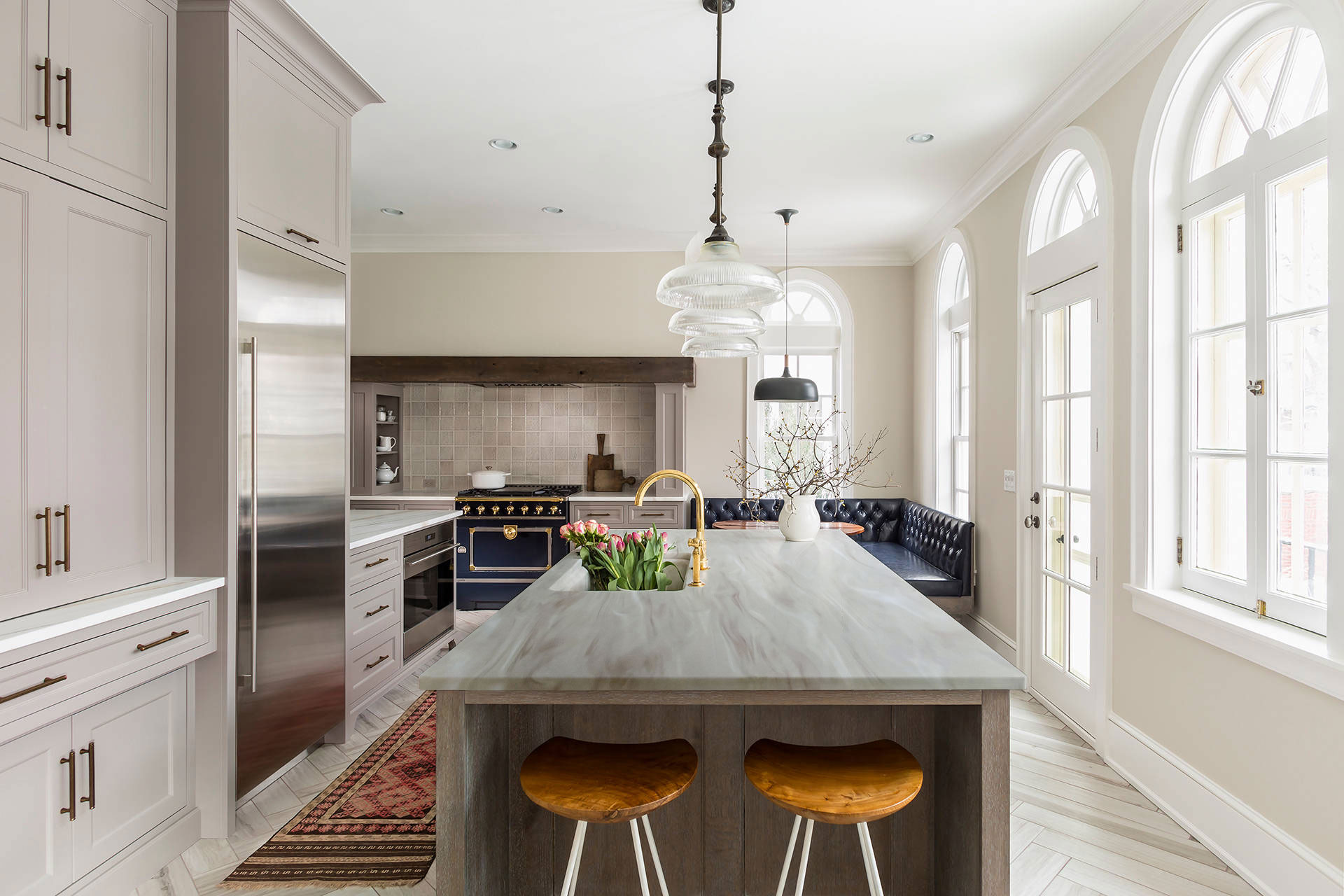
Rather than treating solid surface as a standalone category, it helps to see how it performs against the materials it's most often compared to. The table below breaks down the factors that matter most during a renovation decision.
Factor | Counter Solid Surface | Quartz | Granite | Laminate |
|---|---|---|---|---|
Seamless joints | Yes | No | No | No |
Repairable (sanding) | Yes, easily | No | Limited | No |
Non-porous | Yes | Yes | Requires sealing | Yes |
Heat resistance | Moderate | High | High | Low |
Thermoforming / curves | Excellent | Poor | Poor | Limited |
Upfront cost | Mid-range | Higher | Higher | Lowest |
Lifecycle cost | Low (repairable) | Moderate | Moderate | High (replace, don't repair) |
Hygiene certification (NSF) | Yes | Varies | Varies | Varies |
The pattern that emerges is straightforward: quartz and granite win on raw heat resistance, but counter solid surface wins on fabrication flexibility, repairability, and long-term cost of ownership. Laminate wins on day-one price, but loses that advantage the moment it chips or swells from moisture—at which point replacement is the only fix.
Choose solid surfacing materials if your project calls for integrated sinks, curved runs, or hygiene-sensitive environments. Choose quartz or granite if maximum heat resistance is the top priority and seamless fabrication matters less.
Not every space needs the same thing from its countertop. Here's where solid acrylic surface earns its reputation across different settings.
Kitchens. Integrated countertop-and-sink combinations eliminate the caulk line where food particles and moisture typically collect. A continuous run from countertop to backsplash also simplifies cleaning considerably.
Bathrooms. Vanity tops, shower walls, and freestanding tubs all benefit from a material that water cannot penetrate. In a room defined by constant moisture exposure, that non-porous quality isn't a nice-to-have—it's a requirement.
Healthcare and hospitality. Hospitals, hotels, and restaurants need surfaces that tolerate aggressive cleaning agents and constant use without degrading. Counter solid surface meets NSF hygiene standards, which is why it shows up so often in food-prep areas and medical facilities.
Retail and commercial interiors. Reception desks, wall cladding, and display counters increasingly use solid surfacing materials because of their consistent color and the ability to fabricate complex shapes without visible seams.
Surface Solution® supports all four categories through a one-stop manufacturing model that handles design, production, and custom fabrication in-house. With more than 300 color and pattern options built up over two decades, the range covers everything from stone-look neutrals to bold contemporary finishes.
Not all solid surfacing materials are manufactured to the same standard, and the difference shows up fastest at the edges—literally. When a sheet has consistent density and color all the way through its thickness, rather than just on the surface layer, cuts and routed edges look identical to the face. Cheaper sheets with a thin color layer reveal an obvious mismatch the moment they're cut or sanded.
This is also what makes repairs viable. A countertop with full-depth color consistency can be sanded to remove scratches or burns without creating a visible blemish. Surface Solution® manufactures its acrylic solid surface sheets with this consistency as a baseline requirement, which is part of why repair—rather than replacement—remains a realistic option over the life of the product.
Third-party certifications back this up. CE, NSF, and ISO9001 aren't just logos on a spec sheet; they represent manufacturing processes verified by independent audits. For buyers sourcing materials internationally, that traceability reduces the risk of inconsistent batches or undocumented material changes.
The sticker price on a countertop sample tells only part of the story. A laminate counter might be the cheapest option in the showroom, but once it chips, peels, or swells from water exposure, the only remedy is full replacement.
Counter solid surface doesn't follow that same depreciation curve. Minor scratches and burns can be sanded out in minutes, without specialized tools or a professional callout. Over a 15- to 20-year span, that repairability consistently lowers the total cost of ownership compared to materials that can only be replaced, not restored.
For commercial facility managers, this isn't a marginal benefit. Lifecycle cost—not purchase price—is usually the metric that determines whether a material gets specified for a second project.
Countertop decisions tend to get made under renovation pressure, which makes it tempting to prioritize whatever looks best in the showroom that day. But the material that performs well under daily stress, resists moisture without sealing, and can be repaired rather than replaced will almost always outlast that first impression.
Counter solid surface earns its growing market share by solving the specific problems that stone, tile, and laminate leave unresolved: visible seams, porous surfaces, and damage that can't be undone. If your project involves integrated sinks, curved surfaces, or hygiene-sensitive use, solid surfacing materials deserve a serious look before you commit to anything else.
Manufacturers like Surface Solution® make that evaluation easier by offering verifiable certifications, two decades of production experience, and custom fabrication for projects of any scale. Before finalizing a countertop decision, it's worth requesting samples and comparing them directly against the alternatives in your own space and lighting.
What is counter solid surface made of?
It's composed of acrylic or polyester resin combined with mineral fillers, most commonly alumina trihydrate. Acrylic-based formulations generally deliver the strongest overall performance.
Is solid surface a good choice for busy households?
Yes. Its non-porous, repairable construction makes it well-suited to high-use kitchens and bathrooms where daily wear and occasional accidents are inevitable.
Can damaged solid surface be fixed without replacing the whole countertop?
In most cases, yes. Light scratches and surface damage can be sanded away, restoring the finish without removing or replacing the material.
How do I evaluate a solid surfacing materials manufacturer?
Look for verifiable certifications such as CE, NSF, and ISO9001, a documented production history, and the ability to provide custom fabrication for your specific project needs.


